

Coffee Before Running: How Much, When, and Is It Worth It?
Coffee before running can make you 2% faster in endurance races. Learn how much caffeine to take for your weight and how long before a run to drink it.




Coffee before running can make you 2% faster in endurance races. Learn how much caffeine to take for your weight and how long before a run to drink it.

Two groups of runners with the same 10K time ran 90 minutes at threshold. The group that never ran longer than 70 minutes lost nearly twice as much running economy. Here’s what that means for your pace and the training habits linked to holding it.

Double threshold training means 2 threshold sessions in 1 day. See what elites run and 5 single-session workouts that give you the same benefit. Learn more.

In Strava data from 158,000 marathoners, a strict 3-week taper was linked to a finish 5 minutes 32 seconds faster than a minimal taper, yet about 69% of runners let their mileage climb back up mid-taper. Here is how that relaxed taper affects your race, why a rest-only taper backfires, and how much to cut each week.
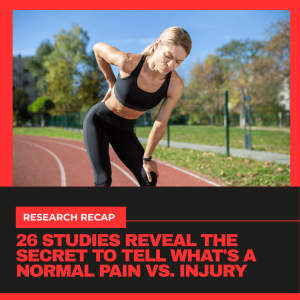
Sore legs after running? Learn why it happens, how to tell normal soreness from an injury, and when it stops, so you can train through it with confidence.
20 to 70% of runners reinjure on the way back. A criteria-based return-to-running protocol and readiness checklist to make your comeback the last one.
Two groups of runners with the same 10K time ran 90 minutes at threshold. The group that never ran longer than 70 minutes lost nearly twice as much running economy. Here’s what that means for your pace and the training habits linked to holding it.
Double threshold training means 2 threshold sessions in 1 day. See what elites run and 5 single-session workouts that give you the same benefit. Learn more.
In Strava data from 158,000 marathoners, a strict 3-week taper was linked to a finish 5 minutes 32 seconds faster than a minimal taper, yet about 69% of runners let their mileage climb back up mid-taper. Here is how that relaxed taper affects your race, why a rest-only taper backfires, and how much to cut each week.

Your watch measures HRV accurately, but one morning’s reading says almost nothing about your fitness. Here are the 4 HRV trends the research supports, a decision table for low-HRV days, and how to measure HRV so the trend means something.

A strong headwind can cost about 12 seconds per mile, but effort pacing and drafting win most of it back. See how much wind slows you and how to beat it.

Switching to high-drop running shoes too fast injures 86% of runners. Follow this research-backed 12-week protocol to transition safely and stay pain-free.
Coffee before running can make you 2% faster in endurance races. Learn how much caffeine to take for your weight and how long before a run to drink it.


The 90/10 diet lets runners eat well about 90% of the time and enjoy the rest, with no banned foods and no calorie counting. See how the 90/10 rule works.


Which meat is best for runners? Compare beef, chicken, and fish for protein and iron, learn how much to eat and when, and whether you can run after a steak.

Lactose intolerance wrecking your runs? Most people handle up to 12g of lactose at once. See why running makes dairy worse and how to manage it for good.
Vitamin C can cut a runner’s post-race cold risk in half, but high daily doses may quietly blunt your training. Here’s how much you need and when to take it.

Cane, coconut, agave, or Splenda? See how the common sugars and sweeteners really compare for your health, and which one actually fuels your running.
20 to 70% of runners reinjure on the way back. A criteria-based return-to-running protocol and readiness checklist to make your comeback the last one.


The IT band barely stretches. See the 5 stretches and hip strength moves that actually ease IT band syndrome in runners, backed by research. Learn more.

Wondering about running cadence by height? See honest, science-based step-rate ranges for your height, why 180 spm is a myth, and how to raise it safely.

Can you take ibuprofen before running? It offers no benefit and raises kidney, sodium, and gut risks during long efforts. See when NSAIDs are safe.
Switching to high-drop running shoes too fast injures 86% of runners. Follow this research-backed 12-week protocol to transition safely and stay pain-free.

Aching, tight, or sore ankles when you run? Learn the 4 common causes, how to tell a sprain from overuse, and the strength and balance fixes that work.

How many days a week should older runners run? Most runners 60 and up do best on 4 to 5 days, with smart spacing between hard sessions. See the weekly plan.


Struggling with slower recovery and slipping times after 40? These 5 evidence-based masters running tips address the exact physiology that changes with age. Learn more.

A typical 40-year-old runs a 55-minute 10K. By 70, that slips to 64 minutes. See decade-by-decade benchmarks and the 4 levers that slow the rate.

As all masters runners know and understand, things change as we age. We’ve already covered the need for More focused strength training More recovery, and

Last week I wrote an article on how to re-think your perception of training theory or workout ideas when you think you’re too slow for

The term masters has a bad connotation. I mean it sounds old. Especially for those “younger masters.” I remember racing the Masters Track and Field

Flow state running feels effortless, but it is a real, measurable brain state. Learn how it differs from a runner’s high and how to reach it on your next run.

Needing to poop while running? Learn the blood-flow cause, the foods that trigger runner’s trots, and how to time runs, hydrate, and prep for race day.

The best BPM for running is 125 to 140 beats per minute. See what the research says about tempo, syncing your cadence, and building a playlist that works.
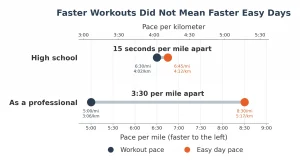
Your easy pace often stalls or slows deep in a training block, and research shows muscle damage cuts running economy 3-7%. See what to judge instead. Find out.

A side stitch hits about 7 in 10 runners. Learn what causes it, how to clear one mid-run in under a minute, and how to stop them from coming back.

Research shows concrete and asphalt produce nearly identical impact forces, but recovery demands are higher on concrete. Here’s what the science says about knees, injury risk, and safe surface training.

"I have come across many coaches, scientists, and physicians associated with running in my lifetime. No one connects all the dots with history, science, and practical application like RunnersConnect does. I look forward to their frequent posts, which are referenced with science and applicable to all the current trends and debates in running. "
Dr. Mark Cucuzzella

"Understanding the science behind the workouts and the plan helps me to trust the training when I know why I'm doing a particular workout and what the result of it should be."
Kara Schmidt

"As a master's runner and journalist specializing in running, I find the well researched information presented on Runner's Connect incredibly useful. You won't find a better clearing house of running knowledge on the Internet! "
Amanda Loudin

"I love your emails! You cover all the important injury prevention and topics related to running performance. As a competitive runner, I'm always learning more from Runners Connect! "
Barbara Broad

"RC helped me smash my stretch goal and I couldn't be happier. In all my races so far I've been simply amazed at what a great feeling it is being well trained and well prepared for the task at hand."
Dean Roberts

"As usual, Jeff and the RunnersConnect team goes beyond all the simplistic advice you normally find in magazines and backs up all theories with research and pratical examples."
Brian Connors