

This guest post was written by Heather Caplan, RD.
Most runners who decide to clean up their diet go all in at once, cutting whole food groups, banning dessert, and trying to eat perfectly every single day.
That approach almost never lasts, and it rarely delivers the weight loss or running goals you wanted when you started.
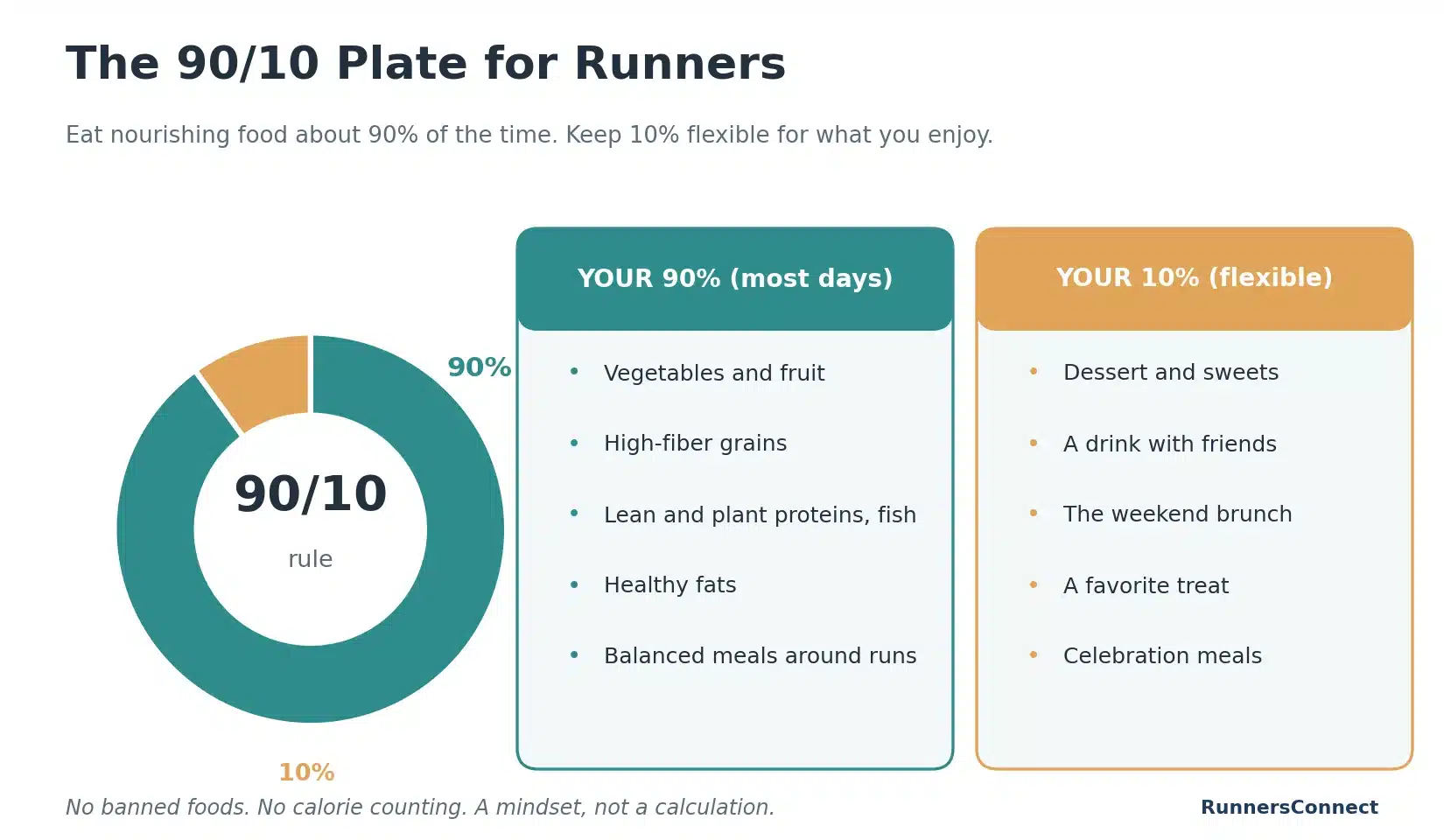
The 90/10 diet is the realistic alternative, because you eat nourishing food about 90% of the time and leave the other 10% for foods you enjoy, with nothing banned and no calories to count.
Here’s what you’ll learn about eating this way as a runner:
- What the 90/10 rule means for the way you eat
- How to shift into a 90/10 mindset one habit at a time
- Why flexible eating beats an all-or-nothing diet when you run
What Is the 90/10 Diet for Runners?
The 90/10 diet means you eat nourishing food about 90% of the time and keep the other 10% flexible for the foods you look forward to.
Your 90% is built from vegetables, fruit, high-fiber grains, lean and plant proteins, fish, and healthy fats, while your 10% covers the dessert, the drink, or the weekend brunch.
The rule is a mindset rather than a calculation, so you never add up percentages or log a single meal to make it work.
Research on dietary restraint found that flexible control of eating was linked to a lower body mass index and less loss of control around food, while rigid all-or-nothing dieting was linked to more overeating and mood disturbance.

That single finding is the whole case for 90/10, because letting yourself enjoy the 10% is what keeps you consistent with the 90% your training needs.
RunnersConnect Bonus
Download your Calorie Calculator for Runners. This calculator will tell you the exact amount of calories you burn each day so you can better target your nutrition needs.
How Do You Start Eating with a 90/10 Mindset?
You build the 90/10 habit the same way you build mileage, in small changes that stack on each other over a few weeks rather than all at once.
Change your nutrition too fast and it backfires, the same way too much running too soon leads to injury instead of fitness.
Work through the 5 steps below at your own pace, giving each one a few days to settle before you move to the next.
Skip the cleanse or detox
A cleanse feels like a clean slate, but most versions restrict food and cut out whole groups at once, which can slide into a habit of avoiding foods and the nutrient gaps that follow.
Start with steady habits rather than a cleanse that tells you to cut out entire categories of food.
Without a food allergy or a medical reason to drop a food, there is no need to cleanse or eliminate anything to eat well.
Change one habit at a time
Look back at what you ate over the past day and pick the one habit you most want to work on, which is usually obvious once you notice the “I should have” moments.
You might see that you should have eaten more vegetables, or kept a snack on hand so you weren’t famished by dinner.
Turn one of those into a specific goal, like a side salad with lunch every day, and repeat it until it feels normal before you add the next change.
Win the morning
A strong first choice in the morning sets the tone for the rest of your day.
Start with a full glass of water when you wake up, then eat a breakfast with protein and vegetables so your 90% begins building early.
One good choice in the morning sets up the next one, and the rest of your day builds from there.
Keep your favorite foods in the 10%
Even a big diet change holds up better when you keep a few foods you love, so decide what fits in your 10% and be at peace with it.
Fill the 90% with balanced meals built around carbohydrate and protein, plus some healthy fat and 3 to 5 servings of fruit and vegetables across the day.
Save the 10% for the celebrations and the weekend brunch you look forward to, so those foods stay part of your week instead of something you feel guilty about.
Eat when you’re physically hungry
Hunger often gets buried under stress and boredom, so pause before a meal or snack and check whether your body feels hungry.
An empty stomach, low energy, or trouble focusing are real hunger signals worth honoring with food.
When those signals are missing, name the emotion you feel instead and find a way to handle it that isn’t a snack.
Ignoring true hunger backfires just as much, because letting yourself get famished is its own stress on a running body, so keep snacks on hand and eat before you reach that point.
Track how the changes feel
Check in on your nutrition the way you log a run, with a short journal of your energy, mood, sleep and digestion.
Steady energy through the day and sound sleep at night are good signs the changes are working for both your body and your running.
Poor sleep, low energy on the run, and mood swings can instead signal that you are under-fueling or drifting toward overtraining.
Why Should Runners Choose 90/10 Over an All-or-Nothing Diet?
Strict commercial diets demand an all-or-nothing plan that drives hard cravings and weight that drops and then rebounds.
The 90/10 approach keeps you consistent because it never asks for perfection, and it protects the fueling your training depends on.
When runners restrict too hard, they drift toward low energy availability, which the 2018 IOC consensus on relative energy deficiency in sport links to impaired training performance and lower bone density.
Keeping that 10% open is one of the simplest ways to stay out of that spiral.
Fill the 90% with balanced meals around your runs, since a sports nutrition review of nutrient timing found that eating carbohydrate and protein in the hours around training improves how well you refuel and rebuild.
The 10% of foods you enjoy gives your training a mental release that matters as much as the fuel on your plate.
Don’t take your diet too seriously
An all-or-nothing approach to a training cycle is hard to sustain, and your diet is the same.
Experiment with foods, keep each change small, and leave room for the meals and moments you enjoy most.
 Heather Caplan is a registered dietitian and marathon runner in the Washington, DC area, where she coaches runners and writes about building a sustainable, flexible relationship with food.