
✦Expert tested & ranked

6 Best Probiotics for Runners in 2026

We scored 6 probiotics on how much the formulation is specifically designed to help runners, whether their strains are supported by research, the dose, what else is in the capsule, and the cost per day. Here are the ones that hold up on a long run.

🏆The short answer

MAS Flush scored highest at 9.5 out of 10. It's the only probiotic here formulated specifically for runners. All of its probiotic strains have research confirming specific benefits for runners. Plus, it includes other ingredients, such as psyllium, endurance-focused digestive enzymes, and blackcurrant, that aid in a runner's gut health that a probiotic alone can't replace.

See our #1 pick

For a cheap daily probiotic with nothing else in it, Culturelle is $0.60 a day.

The Runners Connect coaching team
Runners Connect coaching team
Reviewed by our coaching and nutrition staff
📅 Updated October 2026⏱ 9 min read

How we scored these probiotics

Our methodology prioritizes research in runners and real-world results

6
products compared
5
scoring criteria
6+
months tested
50+
runners interviewed
  • Strains tested in runners (4 points)Every probiotic strain is optimized to target a specific condition or type of bacteria. More weight is given for the products that use probiotic strains that target the unique needs of a runner’s gut and loses them for strains that only target general conditions, like everyday bloating.

    Likewise, more credence is given to the products that use strains directly tested in research studies. A product loses points for including species that have no research-backing or are highly speculative.

    Adding strains doesn't earn points either. In a 2021 review of 65 trials, probiotic strains given in a mix worked no better than the same strains given alone.

    Two studies in marathon runners set the bar. In a 2019 study, runners who took Lactobacillus acidophilus and Bifidobacterium strains for 28 days before a marathon had 57% fewer stomach symptoms late in the race. A 2007 study found that runners who took Lactobacillus rhamnosus GG had stomach symptoms for 1 day after the race, compared with 2.3 days on a placebo. A product earns points for carrying those species.
  • The dose (2 points)The runners who had 57% fewer stomach symptoms took 25 billion CFU a day. A capsule with 1 billion is making a different bet than the research did, and a label that doesn't give a number at all can't be scored.
  • What a probiotic can't reach (2 points)Running upsets your stomach in ways bacteria don't fix: a full colon at the start, less blood reaching your gut, heat getting through the gut lining. We gave points for a fiber that empties the colon before a run, digestive enzymes, and an ingredient that protects the lining.
  • What it costs a day (1 point)We use the cost per day rather than the price on the box. A $65 box of 30 and a $30 bottle of 30 are both one capsule a day, and one of them costs twice as much.
  • Whether it's built for runners (1 point)Runners get stomach trouble for reasons sedentary people don't: blood flow to the gut drops by as much as 80% on a hard run, every stride jostles what's inside, and you're usually miles from a bathroom when it goes wrong.
Side by side

The 2026 comparison table

4 things decide whether a probiotic helps you on a run: whether its species have been tested in runners, how many billion CFU you get a day, what else is in the capsule for the parts of the problem bacteria can't fix, and the price per day.

Those are the columns below.

Swipe the table sideways for every column
ProductScoreSpecies tested
in runners
CFU per
day
Beyond the
probiotic
StrainsPrice per
day
Best for
Winner
MAS Flush#1
9.5 B. animalis
L. acidophilus
70 BPsyllium, 4 enzymes
blackcurrant
3$1.33Stomach trouble on runs View
Physician's Choice 60 Billion#2 7.6 Same species,
untested strains
60 BPrebiotic fiber10$0.98Most bacteria per dollar View
Seed DS-01#3 7.2 B. lactis
(species only)
53.6 BPrebiotic (no fiber)24$1.67Everyday bloating View
Culturelle Digestive Daily#4 6.8 L. rhamnosus GG
(tested in marathon runners)
10 BInulin 200 mg1$0.60Cheapest credible option View
Align 24/7 Digestive Support#5 6.0 None1 BNone1$1.02IBS, on a doctor's advice View
FitBiomics Nella#6 5.4 None10 BNone3$2.17The athlete story View

Prices checked on each brand's own site in October 2026. Seed reports AFU (live cells) rather than CFU. Scores are ours, using the criteria above.

The ranking

The rankings, in full

MAS Flush bottle
Our #1 pick

1. MAS Flush

Score 9.5/10  ·  Best for runners whose stomach goes wrong on the run
$39.95or $33.95 a bottle on the 3-pack
Our verdict

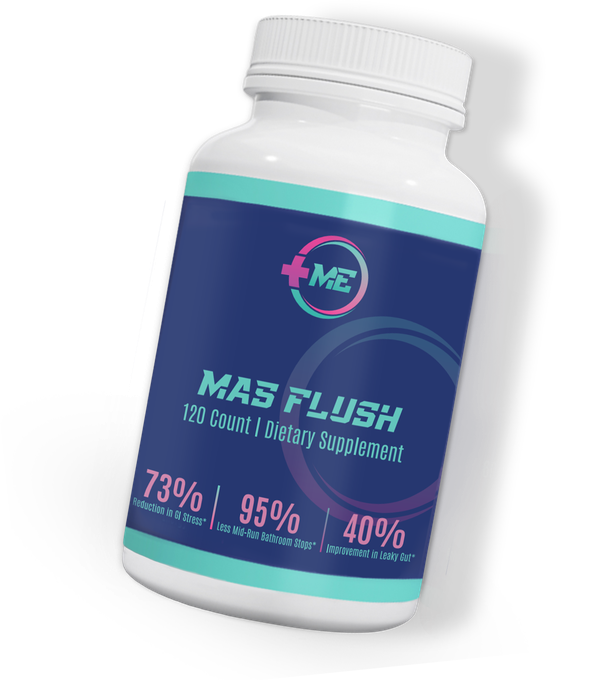
MAS Flush earns the top spot because it's built around probiotic species that were tested in marathon runners. Plus, it adds the 3 things a probiotic alone can't do by itself: help prevent runner's trots, digest the food you train on, and protect your gut lining in the heat.

This is the probiotic built to keep a runner's gut healthy.

Most probiotics are formulated for everyday bloating and regularity. But, running introduces challenges to the gut that most general probiotics don't address.

For example, on long or hard runs, blood flow to your gut can drop by 80% or more. Without this blood flow, your gut doesn’t have the oxygen and nutrients it needs to remove waste products. This is what causes runner's trots and stomach issues late in races.

But, specific probiotic strains have been proven in research to help protect your stomach from these issues. And, it's the inclusion of these specific strains that MAS Flush is ranked first.

A 2019 study found that runners who took the probiotic strains found in MAS Flush (Lactobacillus acidophilus and Bifidobacterium) had 57% fewer GI symptoms in the final third of the marathon than runners who took a placebo.

It showed up in their pace, too. Studies show that these strains slowed the build-up of creatine kinase, inflammation and oxidative stress and increased clearance of lactate

The end result is that the runners who used these probiotic strains slowed down 44% less than the group that used a placebo.

Further research found that runners on the probiotic absorbed 18% more of the carbohydrates they took in during a run, which is the difference between a gel that works and a gel that sits in your stomach.

Then MAS Flush adds 3 additional ingredients to help tackle the unique challenges a runner's stomach faces that a probiotic can't address.

Psyllium husk, which helps add bulk to stool to relieve the feeling of needing to go to the bathroom when you start running.

In MAS's own survey of its customers, 96% of runners reported immediate relief from runner's trots and 74% had less stomach pain.

It also adds blackcurrant extract, which protects the gut lining when your core temperature climbs on a hot run. In a 2025 study, runners who took blackcurrant had 73% fewer GI distress symptoms.

Plus, 4 digestive enzymes (amylase, protease, lipase and cellulase) to help break down the carbohydrate, protein, fat and fiber you eat around training, when less blood reaches your gut and digestion slows.

At $39.95 for 30 days it costs more than the drugstore options and less than Seed or Nella. The 3-bottle bundle brings it to $33.95 a bottle, which is $1.13 a day.

What it does well

  • Carries the specific species that cut late-race stomach symptoms and improved performance in marathon runners, at 70 billion CFU a day
  • Psyllium so you start runs with an empty gut: 96% of runners in MAS's survey reported immediate relief from runner's trots
  • Blackcurrant for the gut lining in heat, and 4 digestive enzymes for the food you train on
  • Same 4 capsules every evening on training days and race day, with no separate race protocol

Where it falls short

  • 4 capsules a day, more than any other product here
  • $39.95 a bottle, more than the drugstore options
  • Needs 4 weeks of daily use before race day. It isn't a same-day fix
  • Not formulated for general gut or other stomach conditions
Try MAS Flush Ships from masedge.com
Physician's Choice 60 Billion Probiotic bottle
Best value

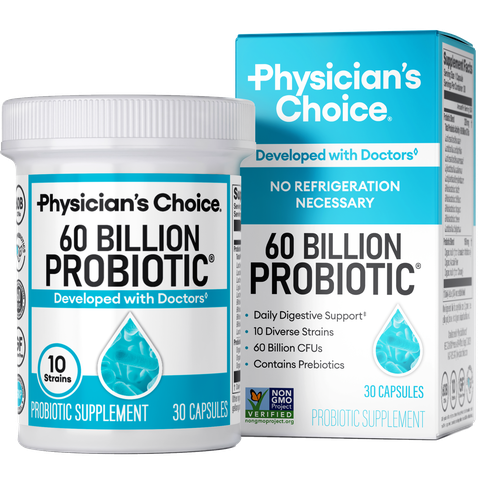
2. Physician's Choice 60 Billion

Score 7.6/10  ·  Best for The most bacteria per dollar
$29.3830 capsules · about $0.98 a day
Tested in runners
Some species, untested strains
CFU per day
60 billion
Beyond the probiotic
Prebiotic fiber
Capsules a day
1

Physician's Choice is the probiotic Amazon sells most, and the label is better than most bestsellers: 10 strains at 60 billion CFU, organic prebiotic fiber to feed them, an acid-resistant capsule, and all of it for under a dollar a day.

Three of its species, Lactobacillus acidophilus, Bifidobacterium lactis and Bifidobacterium bifidum, are the same species that cut late-race stomach symptoms in marathon runners in a 2019 study.

But the same species is not the same strain. A probiotic's results belong to the exact strain that was studied, and the Physician's Choice strains were picked for everyday digestion, with no trial in runners behind them.

The label doesn't let you check that for yourself. It lists 10 species with no strain codes, so you can't look up the research behind any of the bacteria in the capsule.

There's also nothing in the capsule for the parts of the problem bacteria don't fix. The prebiotic feeds the bacteria, so there's no fiber dose that empties your colon before a run, no enzymes, and nothing for the gut lining in heat.

What it does well

  • 60 billion CFU for $0.98 a day, the most bacteria per dollar here
  • Shares 3 species with the probiotic that cut late-race stomach symptoms in marathon runners
  • Prebiotic fiber in the same capsule
  • One capsule a day, no refrigeration, 60-day guarantee

Where it falls short

  • Strains chosen for everyday digestion, with no strain codes on the label to look up
  • No psyllium-type fiber to empty the colon before a run
  • No digestive enzymes, nothing for the gut lining
  • Nothing in the formula accounts for what running does to your stomach
Verdict: The most bacteria for the money. A good everyday probiotic that happens to share species with the runner research, and that is as far as the overlap goes.
Seed DS-01 Daily Synbiotic jar
Everyday pick

3. Seed DS-01

Score 7.2/10  ·  Best for Bloating on ordinary days, not just runs
$49.9930 days, subscription · about $1.67 a day
Tested in runners
B. lactis, species only
AFU per day
53.6 billion
Beyond the probiotic
Polyphenol prebiotic
Capsules a day
2

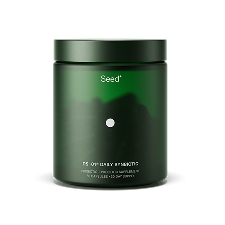
Seed is the best-marketed probiotic in the country, and the formula backs some of it up: 24 strains at 53.6 billion AFU (Seed counts live cells rather than CFU) in a capsule-inside-a-capsule that carries the bacteria through your stomach.

It also has placebo-controlled trials of the full formula, for bloating and regularity.

While it does contain the most species on this list, more isn't necessarily better when it comes to probiotic strains.

Those 24 strains are aimed at the whole body. Seed's label splits them into 4 blends, for digestion, skin, heart health and micronutrients, so more than a quarter of the bacteria in each daily dose go to things that won't help your stomach on a run.

Moreover, a 2021 review in Digestive Diseases and Sciences found that probiotic mixes did no better than single strains. Its conclusion was that picking a strain tested for the condition matters more than how many species are in the product.

At $49.99 a month it is the second most expensive product here. The prebiotic is a polyphenol from Indian pomegranate, so there is no fiber that changes what's in your colon before a run, and no enzymes.

If your stomach misbehaves on ordinary days as well as on runs, Seed's trials speak to that. For mile 20 it is a general probiotic at a premium price.

What it does well

  • Placebo-controlled trials of the whole formula for bloating and regularity
  • The two-capsule design gets more bacteria through stomach acid
  • 24 strains, including 2 Bifidobacterium species that MAS Flush also uses
  • No refrigeration, and a refillable jar

Where it falls short

  • No strain tested in runners, and no Lactobacillus acidophilus
  • $49.99 a month on subscription, $1.67 a day
  • No fiber dose, no enzymes, nothing for the gut lining in heat
  • More than a quarter of the bacteria go to skin, heart and micronutrient blends
Verdict: The right choice if your stomach misbehaves every day, not only when you run. On a long run it is a general probiotic at a premium price.
Culturelle Digestive Daily Probiotic box
Cheapest credible

4. Culturelle Digestive Daily

Score 6.8/10  ·  Best for A cheap daily probiotic with a real trial behind it
$17.9930 capsules · about $0.60 a day
Tested in runners
L. rhamnosus GG, 2007 trial
CFU per day
10 billion
Beyond the probiotic
Inulin 200 mg
Capsules a day
1

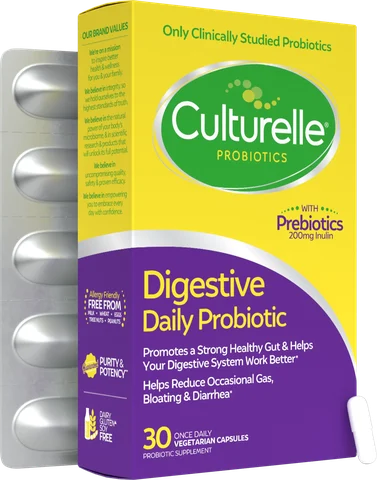
Culturelle is one strain, Lactobacillus rhamnosus GG, at 10 billion CFU, with 200 mg of inulin, for $17.99 a box.

That strain has a marathon trial behind it. In a 2007 study, runners who took LGG for 3 months before a marathon had stomach-symptom episodes that lasted 1.0 day after the race, against 2.3 days on placebo.

That is the finding and its limit. The trial measured how long symptoms lasted after the race. It did not find fewer symptoms during the run, which is what a 2019 study of acidophilus and Bifidobacterium strains found in marathon runners.

One strain, nothing to empty the colon before a run, no enzymes, and nothing for the gut lining. For $0.60 a day it is still the cheapest product here with a runner study you can point to.

What it does well

  • The exact strain tested in marathon runners in a 2007 study
  • $0.60 a day, the cheapest here
  • On the shelf at every drugstore
  • One capsule a day, no refrigeration

Where it falls short

  • One strain, and none of the Bifidobacterium species that cut late-race stomach symptoms in marathon runners
  • 10 billion CFU, under half the 25 billion CFU tested in marathon runners
  • The 2007 trial found faster recovery after the race, not fewer symptoms during it
  • No fiber dose, no enzymes, nothing for the gut lining
Verdict: The cheapest credible option, and the one to pick if your problem is the week after a race rather than mile 20.
Align 24/7 Digestive Support box
Doctor's default

5. Align 24/7 Digestive Support

Score 6.0/10  ·  Best for IBS, if a gastroenterologist put you on it
$42.7742 capsules · about $1.02 a day
Tested in runners
No
CFU per day
1 billion
Beyond the probiotic
Nothing
Capsules a day
1

Align is the probiotic gastroenterologists recommend most, and the recommendation is for one thing: its single strain, Bifidobacterium longum 35624, has trials in people with IBS.

Each capsule holds 1 billion CFU when it's made. The label guarantees 10 million through the best-by date.

One billion is a 25th of the dose that cut stomach symptoms in marathon runners, the strain has never been tested in runners, and there is nothing else in the capsule.

If a doctor put you on Align for IBS, stay on it and talk to them before changing anything.

It was not formulated for what happens at mile 10, and at $1.02 a day it costs more than Physician's Choice for a 60th of the bacteria.

What it does well

  • The strain has trials in IBS, which is why doctors know it
  • One small capsule a day
  • Easy conversation with a gastroenterologist
  • Sold everywhere

Where it falls short

  • 1 billion CFU, a 25th of the dose tested in marathon runners
  • Never tested in runners
  • Nothing else in the capsule
  • $1.02 a day for the smallest dose here
Verdict: A medical recommendation for IBS, and the wrong tool for a long run.
FitBiomics Nella box
Athlete branding

6. FitBiomics Nella

Score 5.4/10  ·  Best for Runners who want the elite-athlete story
$65.0030 capsules · $2.17 a day
Tested in runners
No
CFU per day
10 billion
Beyond the probiotic
Nothing
Capsules a day
1

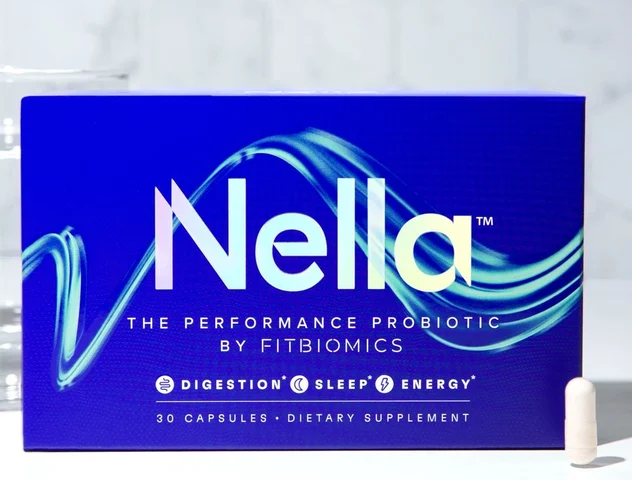
Nella sells the best story in the category: 3 Lactobacillus strains isolated from elite athletes, "decoded from ultra-marathon runners," developed at Harvard. The label lists 10 billion CFU of L. plantarum, L. rhamnosus and L. acidophilus for $65 a box.

Where a strain came from and what it has been shown to do are two different things.

Nella's trial measured sleep, energy and gut comfort in the general population. There is no trial of it in runners, and no Bifidobacterium in the capsule at all.

$65 for 30 capsules is $2.17 a day, the most expensive product here, for a probiotic with no fiber, no enzymes and nothing for the gut lining.

What it does well

  • Strain codes and CFU are on the label
  • Includes Lactobacillus acidophilus, one of the species tested in marathon runners
  • One delayed-release capsule a day
  • 30-day guarantee

Where it falls short

  • No trial in runners, and no Bifidobacterium
  • $2.17 a day, the most expensive here
  • Nothing else in the capsule
  • The trial outcomes are sleep and energy, not stomach trouble on a run
Verdict: Athlete marketing on a general wellness formula, at the highest price in the ranking.
Pick in 10 seconds

Which one should you take

Your stomach goes wrong in the back half of long runs or races.MAS Flush
You want a cheap daily probiotic and nothing else in the capsule.Culturelle, at $0.60 a day
You bloat on ordinary days, not just on runs.Seed DS-01
You want the most bacteria for the least money.Physician's Choice
A gastroenterologist has you on a probiotic for IBS.Stay on it, and ask your doctor about strains tested in runners
Questions runners ask

Probiotic FAQ

How long before a probiotic helps my running stomach?
Plan on 4 weeks of daily use. In a 2019 study, marathon runners on the probiotic had fewer stomach symptoms in weeks 3 and 4 than in weeks 1 and 2, so start at least 28 days before a goal race and keep taking it through race day.
Should I change anything on race day?
No. A probiotic works through what it has built up over the previous weeks, so you take the same dose at the same time of day on race week as on any other week. The thing to change on race day is what you eat the night before, and when you cut fiber.
Can I get the same strains from yogurt or kefir?
Not reliably. Yogurt and kefir labels rarely name their strains or give a count, and every runner study we've cited used a capsule with a known strain at a known dose. Eat them for the food, and get the tested strains from a label that lists them.
Why didn't the probiotic I tried do anything?
Usually because of the strain. Probiotic results are strain-specific, and most drugstore probiotics were chosen for everyday bloating and regularity, so a product can be good at that and do nothing for mile 10. Check the label for the species tested in runners, Lactobacillus acidophilus, Bifidobacterium animalis (also written lactis) and Lactobacillus rhamnosus GG, and for a dose in the tens of billions.
Does a probiotic stop runner's trots by itself?
Rarely. A probiotic works on the bacteria in your gut. Runner's trots also come from a full colon at the start, from blood leaving your gut on a hard run, and from the jostling of each stride, which is why the formula that ranked first here pairs the probiotic with psyllium and why your pre-run routine still matters.
Will it upset my stomach at first?
The first few days on a new probiotic can feel a little unsettled while your gut adjusts, and it usually passes within a week. Take it in the evening rather than before a run for the first week, and start it in a base-training block rather than race week.

The formula that scored highest

The species tested in marathon runners at 70 billion CFU, psyllium so you start every run with an empty colon, blackcurrant for the gut lining and 4 digestive enzymes, in 4 capsules every evening. Give it 4 weeks before your next race.

Money back guarantee, keep the bottleRated 5 out of 5 by verified buyersOne dose, every eveningWorldwide shipping
MAS Flush bottle