

You are a few miles into an easy run when your stomach starts to cramp, and within a mile you are scanning the route for the nearest bathroom.
Stomach pain on the run is one of the most common complaints in distance running, and it usually traces back to a handful of fixable causes.
Your gut is not broken, and you are not stuck with it.
Just like your legs, your stomach can be trained to handle the demands of running with far less trouble.
Here is what you will learn about how to stop stomach pain when running:
- Why running pulls blood away from your gut and triggers pain
- How dehydration and over-hydration each upset your stomach
- How long before a run to stop eating
- Which foods most often cause problems on the run
- How to train your gut so symptoms fade over time
Why Does Running Upset Your Stomach?
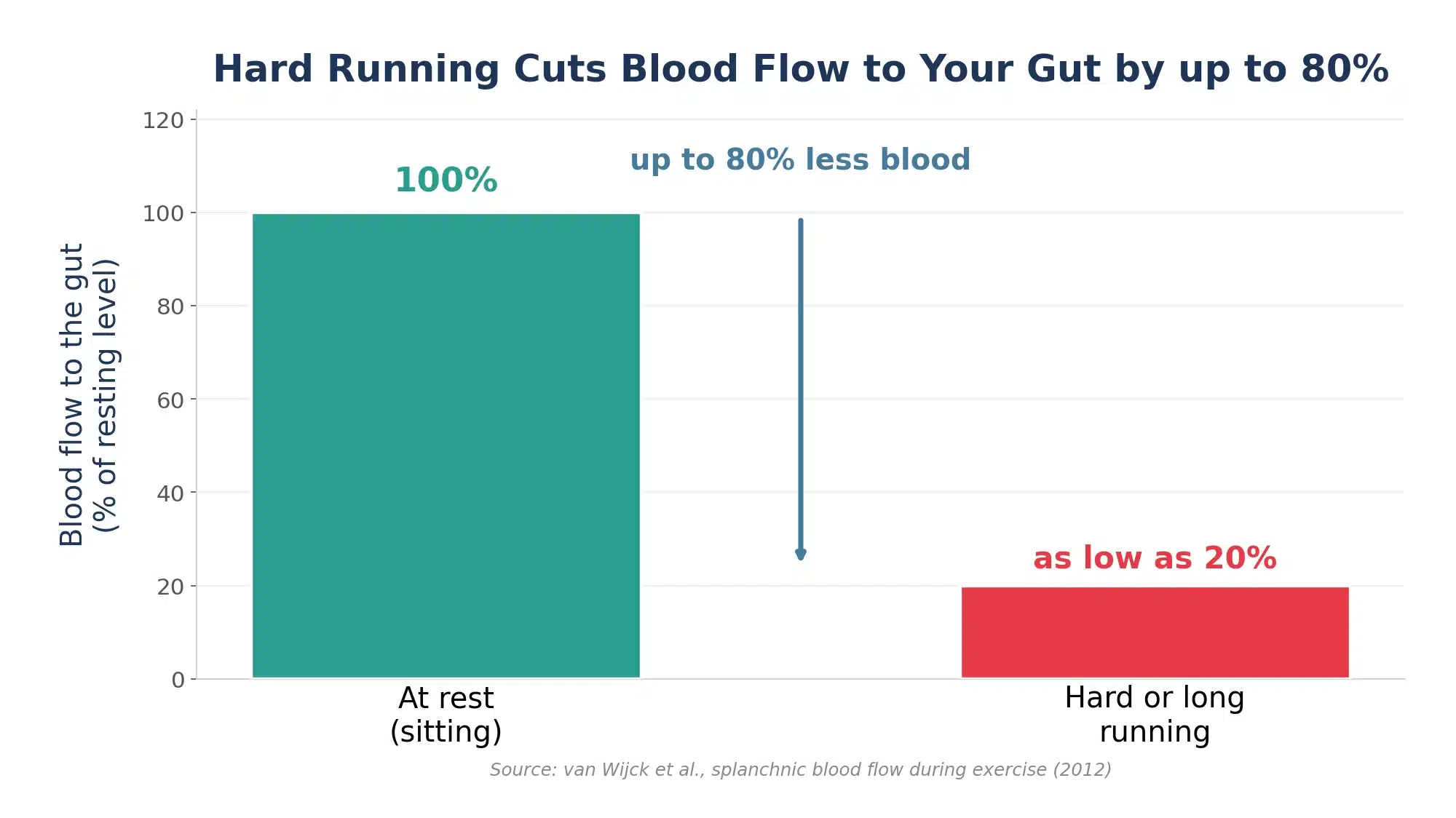
Running pulls blood away from your digestive organs and sends it to your working muscles and skin.
With less blood reaching your gut, digestion slows and the lining of your intestine comes under stress, which produces the cramping, nausea, bloating, and bathroom urgency that runners call runner’s belly or the runner’s trots.
MAS Edge, our sister company, lists every trigger, from heat to coffee to race nerves, in its guide to the causes of runner’s trots and how to fix them.
Research on blood flow during exercise shows that hard or prolonged running can cut blood flow to the gut by up to 80%, enough to injure the intestinal lining and make it temporarily leakier.

The harder and longer you run, the more blood your muscles demand and the less your gut receives.
That is why symptoms show up during races and hard workouts more than on easy jogs, and why the same runner can feel fine one day and sick the next.
The good news is that you control the biggest triggers, starting with what and how you drink.
Can Dehydration Cause Stomach Pain When Running?
Starting a run even mildly dehydrated makes stomach pain more likely.
When you are low on fluid, your stomach empties more slowly, so anything you drink or eat sits and sloshes instead of moving through.
One study on running and dehydration found that losing fluid slowed the rate at which the stomach emptied and increased reports of gut discomfort during exercise.
Running already slows digestion, so beginning a run dehydrated slows your stomach even further.
Drink to thirst through the day, and practice taking small sips of plain water on any run longer than 45 to 60 minutes, even shorter in hot weather.
Can Drinking Too Much Water Give You a Sloshing Stomach?
Drinking too much before or during a run causes as many problems as drinking too little.
Your gut can only absorb fluid so fast while you run, so extra water pools in your stomach and produces that heavy, sloshing, seasick feeling.
If your stomach feels like a water balloon, you are drinking faster than your gut can absorb, so stop and let it catch up.
This shows up most in long races, where runners try to hit a fixed drinking schedule instead of responding to real thirst.
Sip steadily rather than chugging at every aid station, and if you often drink out of fear of dehydration, our guide on the dangers of drinking too much water while running will help you find the balance.
How Long Before a Run Should You Stop Eating?
A normal-sized meal takes about 2 to 3 hours to clear your stomach, so give a full meal that much time before a hard run.
Running on an empty stomach is not the answer either, since a long run or hard workout needs fuel to go well.
The fix is a small, familiar, easy-to-digest snack in the hour before you run.
Aim to finish a full meal 2 to 3 hours out and top up with a small carbohydrate snack in the final hour before a hard effort.
Reliable pre-run choices are a banana, a few dates, a slice of toast with honey, or a little juice.
Finding one go-to snack that always sits well gives you something you can trust on race morning without any surprises.
Which Foods Are Most Likely to Cause Stomach Pain on the Run?
Fat, fiber, and protein digest slowly, which makes them the foods most likely to leave you sick on the run.
When those foods are still in your gut as you start running, the drop in blood flow leaves them sitting there, and your gut often clears them the fast way, through diarrhea.
A review of gastrointestinal complaints in athletes concluded that high-fat, high-fiber, and high-protein foods eaten close to exercise are among the strongest dietary triggers of stomach symptoms during running.
A group of carbohydrates called FODMAPs, found in foods like onions, apples, beans, and wheat, is another common hidden trigger because they draw water into the gut and ferment.
The table below sorts common pre-run foods by how likely they are to cause trouble.
| Lower-risk before a run | Higher-risk before a run |
|---|---|
| White toast, white rice, plain bagel | Whole-grain, high-fiber bread and cereal |
| Banana, dates, a little juice | Apples, pears, dried fruit, beans |
| Small amount of honey or jam | Nuts, nut butter, cheese, fatty meat |
| Familiar foods you have tested | New gels, bars, or meals on race day |
Race day is the worst possible time to test a new gel or an unfamiliar breakfast, so stick with what you have already trained on.
For a deeper look at building a pre-run plate that keeps your stomach calm, see our guide on what to eat before a run.
RunnersConnect Bonus
Download your FREE Guide where we share the Best Foods to Eat Before Running.
Do Energy Gels and Sports Drinks Cause Stomach Problems?
Energy gels and sports drinks are common culprits for GI distress late in long runs and races.
They work by pushing sugar quickly into your bloodstream, but a concentrated dose of sugar pulls water into the gut and slows stomach emptying.
Research on carbohydrate and exercise shows that drinks with a sugar concentration above roughly 8% empty from the stomach more slowly and raise the risk of GI symptoms during running.
Keep sports drinks in the 5 to 8% carbohydrate range, and choose fuels that blend glucose and fructose, since your gut absorbs the two through separate doors and handles more total sugar without backing up.
Take the same gels and drinks in training that you plan to use on race day, at the same points in the run.
A stomach that has practiced taking sugar on the move is far less likely to rebel at mile 16.
How Do You Train Your Gut to Handle Running?
Your gut adapts to repeated fueling the same way your muscles adapt to repeated training.
Practising eating and drinking on your longer runs teaches your stomach to empty faster and absorb more, so the same fuel that once made you sick starts to sit comfortably.
A 2023 review of gut-training studies reported that about 2 weeks of repeated carbohydrate feeding during exercise cut gut discomfort by roughly 47%.
Start by drinking your race-day fluids on easy long runs, then add your planned gels or chews once that feels normal.
Build the amount gradually over several weeks rather than forcing a full race-day fueling plan onto an untrained stomach in one session.
This is the most reassuring fact about running and stomach trouble, because it means the problem gets better with practice instead of being something you are stuck with.
When Should Stomach Pain After Running Worry You?
Most stomach pain from running eases once you fix your hydration, food timing, and fueling.
Symptoms that keep coming back after those changes, or that include blood, severe pain, or ongoing diarrhea, deserve a look from a doctor.
Persistent trouble can point to an underlying issue like a food intolerance, celiac disease, or irritable bowel syndrome that has other symptoms beyond running.
One practical step before that point is a short trial of a lower-FODMAP diet in the days around your hardest sessions.
A study on recreational runners found that a short-term low-FODMAP diet reduced exercise-related gut symptoms and improved runners’ perceived ability to train.
Keep a simple food and symptom log so you can spot the specific foods and timing that set your stomach off.
What Should You Eat After a Run When Food Turns Your Stomach?
If the thought of food after a hard run makes you queasy, you do not have to force it down in the first few minutes.
The idea of a narrow recovery window has been softened by newer research, so a delay of an hour or so while your appetite returns will not undo your training.
Get a few sips of water in straight away, then shower, cool down, and eat real food once your stomach settles.
Liquids like a fruit smoothie often go down more easily than solid food when your gut is still unsettled.
You are better off waiting an hour and eating real food than forcing down something you cannot stomach.
| Cause of stomach pain | What to do about it |
|---|---|
| Blood leaving the gut during hard efforts | Ease into intensity and train your gut over time |
| Starting a run dehydrated | Drink to thirst daily and sip water on longer runs |
| Drinking too much at once | Sip steadily instead of chugging at aid stations |
| Eating too close to running | Full meal 2 to 3 hours out, small snack in the last hour |
| Slow-digesting or trigger foods | Favor low-fiber, low-fat carbs and skip new foods on race day |
| Over-concentrated gels and drinks | Keep drinks at 5 to 8% carbs and practice fueling in training |
Running is meant to make you feel better, and with a few adjustments to how you hydrate and fuel, your stomach can come along for the ride.



One Response
Best article about stomach pain.