Training Articles

Aerobic vs Anaerobic Running: Which Fuels Your Race?
Even an 800 m race gets 66% of its energy aerobically. Learn the real difference between aerobic and anaerobic running and how to train each. Learn more.

Even an 800 m race gets 66% of its energy aerobically. Learn the real difference between aerobic and anaerobic running and how to train each. Learn more.

Research shows runners lose leg power twice as fast as strength after 40. Learn the heavy lifts, jumps and calf work that protect your stride. See how.


Trained cyclists lost 5.8% of their power at 3,900 ft and 19.8% at 10,500 ft. See how much elevation affects running and how to pace your race. Learn more.


Insoles change forces more than foot shape. See the 4 types, which ones cut injury risk by 28% in trials and when custom pairs pay off. Learn more here.

A sweetened applesauce pouch has about 18 g of carbs, close to a gel. See which natural running gel alternatives work, plus a gel-free marathon plan. Find out.

Six weeks of plyometrics made runners 2.7% faster over 3 km. Get the week-by-week strength training plan for runners, from light lifts to heavy sets. See how.

Research shows strength holds for up to 4 weeks off and 1 lift a week keeps almost all of it. Learn why runners should build strength between races. See how.

Matching shoes to arch height didn’t cut injuries in 7,203 military recruits. Learn your foot type and what to use instead to pick your next running shoe.
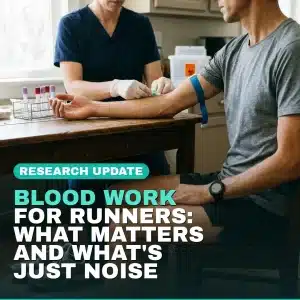
A normal blood test can still mean low iron for a runner. Here are the blood markers that matter, which results are just noise from hard training, and how to time blood work across a training cycle.

Every extra mile your friends run adds about a third of a mile to yours. Here is what the research says about running with other people, why training alone makes the post-race and winter slump worse, and who to run with on each type of run.