
Your body doesn’t get stronger from the hard workout itself.
It gets stronger during the hours and days that follow, when the right recovery signals trigger adaptation.
The problem is that several widely accepted recovery practices actively block those signals. In this article you’ll learn:
- Why ibuprofen slows rather than speeds muscle repair
- When ice baths help versus when they hurt long-term adaptation
- Why antioxidant supplements can work against your training
- What to eat in the 30-minute window that matters most
- How foam rolling reduces soreness when done correctly
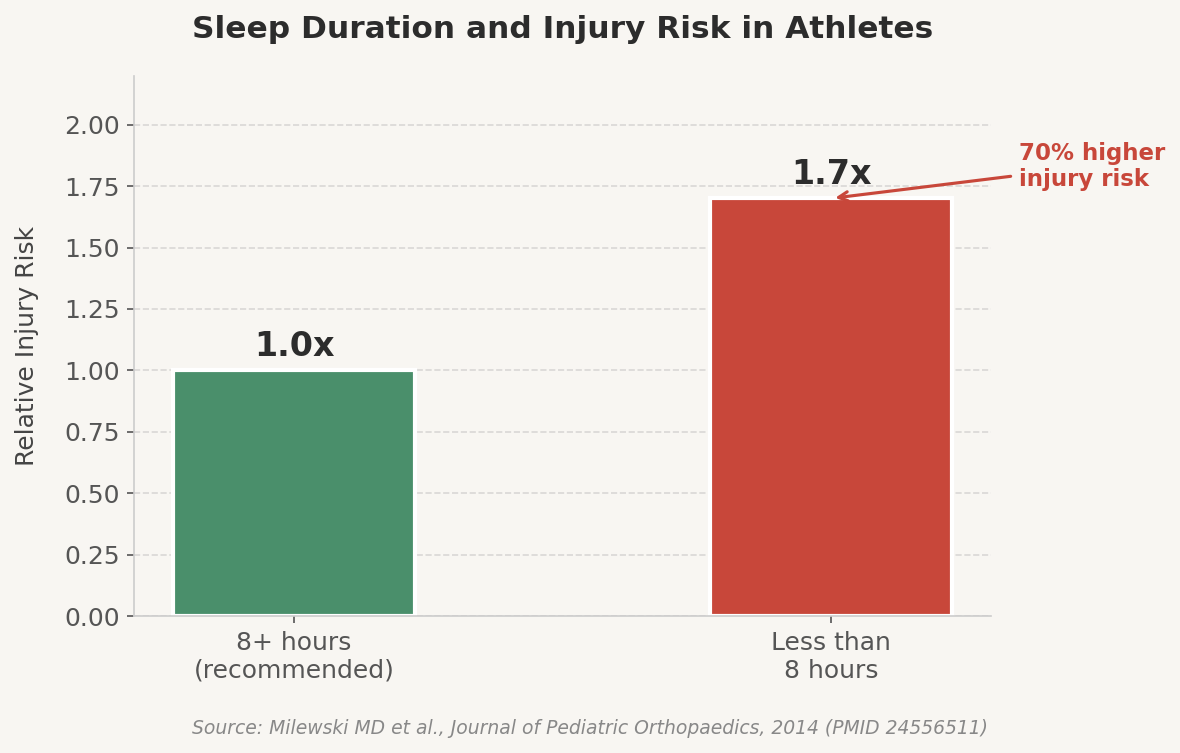
- Why sleep deprivation nearly doubles your injury risk
Does Taking Ibuprofen After a Run Help or Hurt Recovery?
Ibuprofen reduces inflammation, but the inflammation it blocks is the same process your muscles need to repair and adapt.
Research has shown that ibuprofen use during endurance training canceled running-distance-dependent adaptations in skeletal muscle.

When you finish a hard run, leukocytes and macrophages flood damaged muscle fibers.
These cells clear cellular debris and release growth signals that trigger satellite cell activation, the process that makes muscle fibers thicker and stronger than before.
NSAIDs short-circuit this process by blocking COX-2 enzymes, which suppresses prostaglandin production and slows the satellite cell proliferation that drives adaptation.
Taking ibuprofen after a hard workout doesn’t just mask soreness. It reduces the training adaptation you worked to earn.
If you have a genuine overuse injury or acute impact inflammation, ibuprofen has legitimate therapeutic uses. But ibuprofen and running routine recovery are not a good combination.
For mild post-run soreness, the better approach is time, sleep, and light movement rather than medication.
Should You Ice Bath After Every Hard Workout?
Cold water immersion reduces soreness and helps you feel better the next day, but that benefit has a cost when used habitually during a training block.
Studies have found that regular cold water immersion attenuated long-term gains in muscle mass and strength compared to active recovery, with lower satellite cell counts at 24 and 48 hours post-exercise.
The mechanism mirrors the ibuprofen problem: cold constricts blood vessels, reduces inflammation, and interrupts the same adaptation signals your muscles are using to rebuild stronger.
That said, ice baths have a legitimate role. The research distinguishes between two situations:
- Race recovery: During a race series or high-volume competition block where the goal is readiness for the next event rather than maximizing adaptation, cold immersion helps manage fatigue without a significant long-term penalty.
- Training adaptation: During your primary training block, routine ice baths after hard sessions work against the fitness you’re trying to build.
Save ice baths for race weekends and competition blocks, not as a routine recovery habit during your training season.
Do Antioxidant Supplements Block Your Training Adaptations?
High-dose antioxidant supplements, particularly Vitamin C and Vitamin E taken around workouts, blunt the cellular signals that hard training produces.
Research published in PNAS found that Vitamin C and E supplementation prevented exercise-induced improvements in insulin sensitivity and blocked the expression of genes involved in mitochondrial biogenesis.
The reason is counterintuitive: reactive oxygen species (ROS), which antioxidants neutralize, aren’t just cellular damage. They are also the signaling molecules that trigger mitochondrial biogenesis and aerobic capacity gains after a run.
When you flood your system with exogenous antioxidants after training, you reduce oxidative damage but also interfere with the downstream cascade that makes you a better runner.
High-dose Vitamin C or E taken immediately after a hard workout may reduce the aerobic adaptation from that session.
The evidence doesn’t apply to antioxidant-rich foods. Berries, leafy greens, and tart cherry juice show neutral-to-positive effects on recovery when consumed through whole foods.
The problem is high-dose isolated supplements taken in the immediate post-workout window.
What Should You Eat in the First 30 Minutes After a Hard Run?
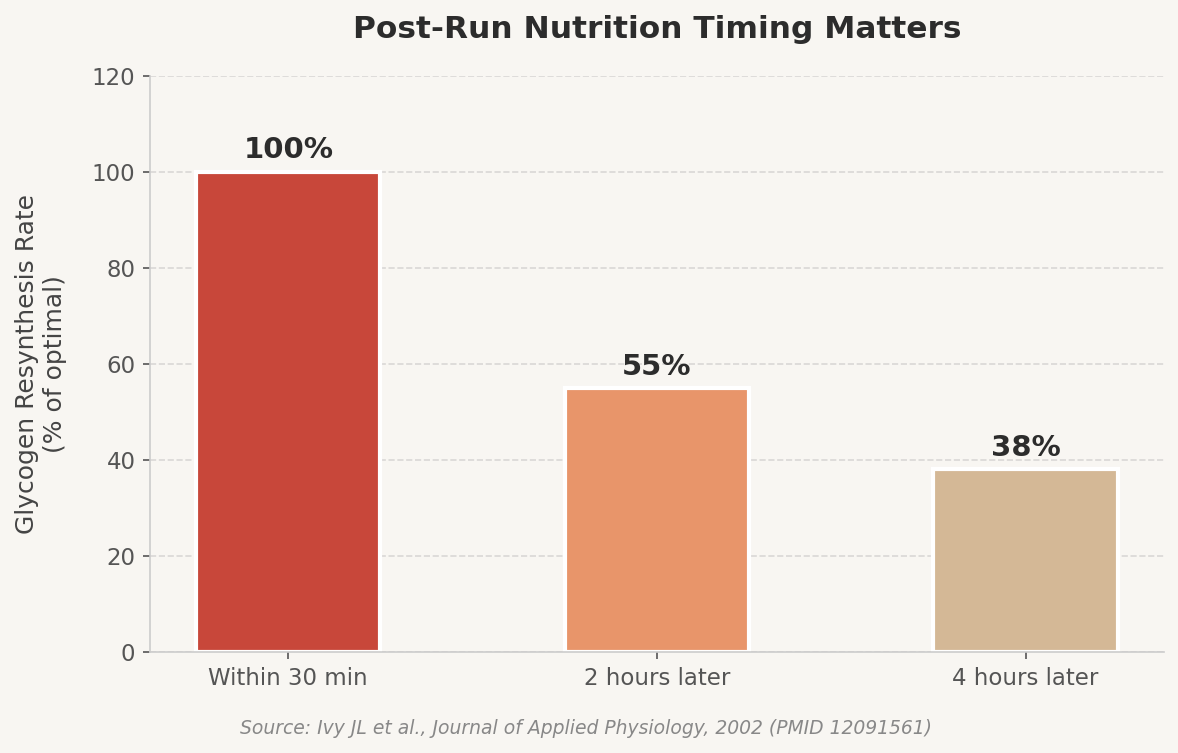
Muscle glycogen replenishment is fastest in the 30 minutes immediately following exercise, when glucose transporters are most active and insulin sensitivity is at its peak.
Research has shown that consuming 1.0–1.5 g of carbohydrates per kg of body weight within 30 minutes post-exercise restores glycogen at nearly twice the rate of delayed intake.
Adding protein accelerates the process further.
A 4:1 carbohydrate-to-protein ratio in the immediate post-workout window supports both glycogen resynthesis and the muscle repair process simultaneously.
Practical targets for a 150-lb (68 kg) runner: 68–100 g of carbohydrates and 17–25 g of protein within 30 minutes of finishing. Common options that hit this ratio include chocolate milk (natural 4:1 balance), rice with eggs, or a recovery shake with banana and a protein source.
For a complete breakdown of timing and food choices, see the two recovery nutrition windows and what to eat in each.
Skipping post-run nutrition or eating more than 60 minutes after finishing slows glycogen recovery by up to 50% compared to eating within 30 minutes.
RunnersConnect Bonus
Download our FREE recovery foods guide, with the top 10 foods for each of the essential recovery vitamins, minerals and macro nutrients. Plus a sample 1-day meal plan!
Does Foam Rolling Actually Speed Up Recovery?
Foam rolling doesn’t repair muscle fibers the way sleep and nutrition do, but it does reduce soreness and restore range of motion, which keeps training consistent.
A controlled study found that 20 minutes of foam rolling immediately post-exercise, and again at 24, 48, and 72 hours, significantly reduced muscle soreness and preserved sprint speed and power output compared to a control group.
The mechanism is primarily neurological: sustained pressure on soft tissue reduces neural tension, increases local blood flow, and activates the parasympathetic nervous system, which accelerates the shift out of the post-exercise stress state.
Protocol matters more than duration. Slow passes of 1–2 seconds per inch outperform rapid rolling.
Spending 60–90 seconds per muscle group, and pausing on tender spots rather than rolling past them, produces the largest reduction in soreness markers.
Foam rolling for 20 minutes after a run reduces next-day soreness and helps maintain training quality in back-to-back workout days.
Static stretching held for longer than 60 seconds immediately post-run shows weaker recovery evidence and can temporarily reduce force production. Save longer holds for later in the day.
How Much Does Sleep Affect Running Recovery?
Sleep is the single most powerful recovery tool available to any runner, and the one most consistently undervalued.
Research tracking adolescent athletes found that sleeping fewer than 8 hours per night was associated with 1.7 times greater injury risk compared to athletes sleeping 8 or more hours.
The mechanism is direct: the majority of growth hormone secretion occurs during slow-wave sleep, and growth hormone is the primary driver of muscle tissue repair, protein synthesis, and connective tissue regeneration after a hard workout.
When sleep is shortened or fragmented, the nightly growth hormone pulse is truncated.
Muscle repair is incomplete, and the inflammatory markers from the previous workout haven’t fully cleared. You start the next session already behind on recovery.
For runners training 40–60 miles per week, 7–9 hours per night is the floor for adequate adaptation. During peak training blocks, 8–9 hours is a more appropriate target.
No supplement, ice bath, or foam rolling session compensates for consistently short sleep. Growth hormone release during deep sleep is the primary driver of muscle repair.
Recovery Mistakes at a Glance
| Recovery Practice | Common Mistake | What to Do Instead |
|---|---|---|
| Ibuprofen | Routine post-run use | Reserve for genuine injury; allow natural inflammation |
| Ice baths | After every hard workout | Use during race blocks; avoid during primary training |
| Antioxidants | High-dose supplements post-workout | Eat antioxidant-rich foods; skip isolated supplements |
| Post-run nutrition | Skipping the 30-min window | 4:1 carb:protein ratio within 30 min of finishing |
| Foam rolling | Skipping it or rolling too fast | 20 min, slow passes, 60–90 sec per muscle group |
| Sleep | Fewer than 7 hours during training | 7–9 hours nightly; 8–9 during peak training blocks |