The yellow Splenda packet sits on the same table as the pink and blue ones, and runners ask me the same thing about all three: is this the smart way to cut sugar?
Splenda earned a scary reputation years ago, built mostly on rat studies and a few dramatic headlines.
The research has moved on since then, and the honest answer for runners is more useful than either “totally safe” or “secretly toxic.”
Here’s what you’ll learn:
- What sucralose is and how your body handles it
- What regulators and recent studies say about safety
- Whether Splenda spikes your blood sugar or breaks a fast
- How it behaves in your gut before and during a run
- The sweetener choice that fits a runner’s diet
What Is Splenda, and How Is Sucralose Made?
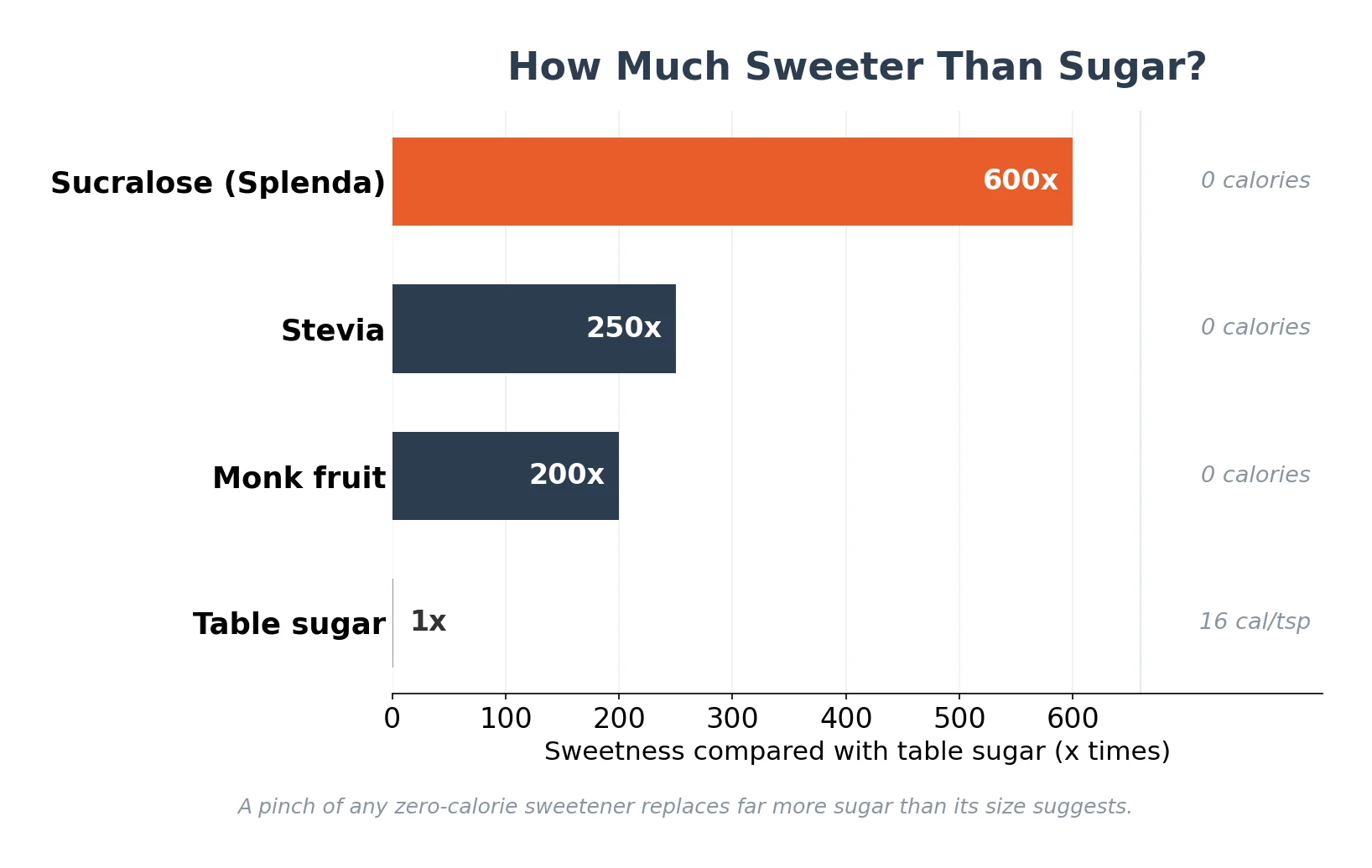
Splenda is the brand name for sucralose, a no-calorie sweetener about 600 times sweeter than table sugar.
Sucralose starts as regular sugar, and chemists swap 3 parts of the sugar molecule for 3 chlorine atoms.
That swap does two things: it makes the molecule intensely sweet, and it makes it hard for your body to break down.
Most of the sucralose you swallow passes straight through you without being absorbed or used for energy.
Sucralose gives you the sweet taste of sugar with essentially zero calories and no digestible carbohydrate.
The word “chlorine” scares people, because they picture bleach or a swimming pool.
Chlorine bonded into a stable molecule behaves nothing like chlorine gas, in the same way that the chloride in ordinary table salt is safe to eat.
Is Sucralose Safe, or Should Runners Avoid It?
Sucralose is one of the most heavily reviewed food additives on the market.
The FDA approved sucralose in 1998 after examining more than 110 safety studies, and set an acceptable daily intake of 5 mg per kilogram of body weight.
For a 150-pound runner, that ceiling works out to roughly 23 tabletop packets a day, far more than anyone uses.
European regulators reached the same conclusion in their most thorough look yet.
A 2026 European re-evaluation reviewed short and long-term data and reaffirmed that sucralose is safe at current intake levels.

One recent finding is worth understanding rather than fearing.
A 2023 laboratory study reported that a trace byproduct of sucralose, called sucralose-6-acetate, damaged DNA in isolated human cells and gut tissue.
That study used cells in a dish, not people, and the sweetener’s maker disputes the methods.
No human research has shown harm at normal intakes, which is why regulators still classify sucralose as safe.
For a runner using a packet or two a day, the safety record supports moderate use without worry.
Does Splenda Raise Your Blood Sugar or Break a Fast?
On its own, sucralose has little effect on your blood sugar or insulin.
Because it is not a carbohydrate and barely gets absorbed, a Splenda-sweetened coffee does not deliver the glucose load that sugar does.
A network meta-analysis of sweetener drinks found no meaningful acute rise in glucose or insulin compared with water.
That matters if you track your morning fast or keep blood sugar steady between runs.
Black coffee with sucralose will not spike your glucose the way a sugared drink will.
The picture during exercise is different, and it is where the sweet taste can help.
Your brain reacts to sweetness in your mouth even when no calories follow.
In one trial, runners who rinsed with a sweet, calorie-free solution ran faster over a 30-minute effort than those who rinsed with plain water.
That trick works for short, hard efforts, when you want the signal of fuel without the fluid sitting in your stomach.
For anything longer than about an hour, you still need real carbohydrate, because sucralose gives your muscles nothing to burn.
Can Sucralose Upset Your Stomach on a Run?
Sucralose is a common ingredient in gels, drink mixes, and recovery products, so you may already train on it without knowing.
Because it passes through you largely unabsorbed and is not fermented like sugar alcohols, it rarely causes the bloating that sorbitol or mannitol can.
If a product bothers your stomach, the usual culprit is the carbohydrate blend or the drink’s concentration rather than the sweetener.
Tolerance still varies from runner to runner, and the only way to know yours is to test it in training.
Never try a new sweetened product for the first time on race day.
The same practice that settles your stomach on gels applies here, which is why it pays to train your gut the way you train your legs.
Run 3 days on your usual sweetened drink, then 3 days without it, and note any difference in how your gut feels.
Ready For More?
Then start our FREE Race Day Fueling email course!
You’ll learn how to calculate when you’ll bonk, how to hydrate, what foods to eat during your race, and more! From case studies to scientific research, we’ll help you learn how to best fuel for your next race.
What Does Sucralose Do to Your Gut Bacteria?
The gut microbiome is where the current sucralose debate centers.
Short-term, moderate use looks reassuring.
A controlled trial in healthy adults found no major shift in gut bacteria when sucralose was consumed within the approved daily limit over 2 weeks.
Daily, high-volume use is where researchers have started to see changes.
A 2025 trial found that 30 days of daily sucralose raised glucose and insulin and shifted gut bacteria in healthy volunteers.
That means the sweetener is not completely inert once it becomes a daily habit at high volume.
For a runner, a strong gut is part of a strong immune system and a settled stomach on long runs.
The practical read is simple: an occasional packet is fine, but a diet built on artificially sweetened drinks all day is worth reconsidering.
Is There a Better Sweetener for Runners?
The best move for most runners is to lower how much intense sweetness you rely on, whatever the source.
Your taste buds adjust fast, and a few days with less sweet food makes fruit taste sweeter again.
When you do want a no-calorie option, stevia and monk fruit are plant-derived choices that behave much like sucralose in your body.
None of them are health foods, and none of them fuel a run.
Real training fuel is carbohydrate, and knowing how much sugar you need around hard sessions matters more than which sweetener sits in your coffee.
| Sweetener | Calories | Effect on blood sugar | Runner use |
|---|---|---|---|
| Table sugar | ~16 per tsp | Raises glucose | Fast fuel during and around runs |
| Sucralose (Splenda) | 0 | Minimal on its own | Sweet taste, no fuel value |
| Stevia | 0 | Minimal | Sweet taste, plant-derived |
| Monk fruit | 0 | Minimal | Sweet taste, plant-derived |
Use sucralose the way you would use any convenience: in moderation, with your eyes open, and never as a substitute for the carbohydrate that powers your miles.