

Meat is the most concentrated source of protein your body can digest, and for runners that protein does more than build muscle.
That protein also comes packaged with iron for oxygen transport, B12 for energy, and the amino acids your muscles rebuild with.
The question most runners have is not whether to eat meat. It is which meats give you the most protein and iron per serving, and how to fit them around your training.
Each type brings something different to a runner’s plate, so the best choice depends on what your legs need that day.
Here’s what you’ll learn:
- How much protein runners need each day
- Why beef is the strongest pick for iron and B12
- How chicken and salmon compare for lean protein and recovery fats
- How much meat to eat at a meal, and when
- Whether you can run right after eating a steak
How Much Protein Do Runners Need Each Day?
Runners need more protein than the standard health guideline, because hard training breaks down muscle protein that your body has to rebuild.
The general recommendation for adults is 0.8 grams of protein per kilogram of body weight per day, and endurance guidelines have long put runners at 1.2 to 1.4 grams per kilogram.
A study of endurance-trained men measured their protein needs on the day after a 20 km run and found the requirement reached about 1.65 grams per kilogram of body weight, higher than the older 1.2 to 1.4 gram target.

For a 70 kg (154 lb) runner, that is roughly 115 grams of protein a day during hard training.
Meat is one of the easiest ways to reach that total, because a single serving delivers 20 to 30 grams of complete protein with all the amino acids your muscles need.
A single serving also delivers about 2 grams of the amino acid leucine, the switch that turns on muscle protein synthesis after a run.
RunnersConnect Bonus
Download our FREE recovery foods guide, with the top 10 foods for each of the essential recovery vitamins, minerals and macro nutrients. Plus a sample 1-day meal plan!
Is Beef the Best Meat for Runners?
Beef is the strongest choice when your goal is iron, and iron is the nutrient runners lose most easily.
The iron in red meat is heme iron, the form your gut absorbs far better than the iron in plants or supplements.
Your body absorbs roughly 15 to 35% of heme iron from meat, compared with 2 to 20% of the non-heme iron in plants and fortified foods.
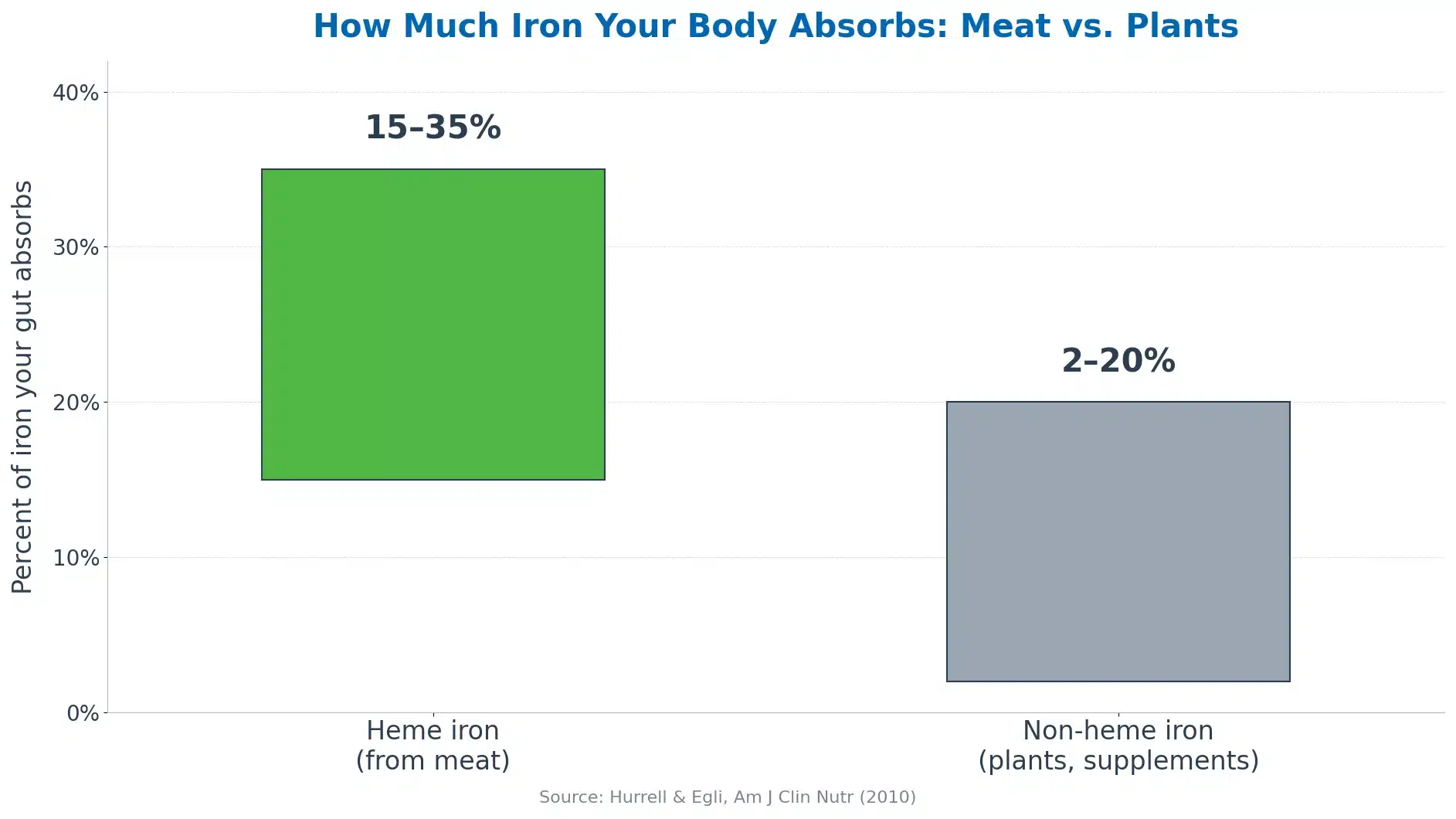
Runners need that easily absorbed iron because hard training drains iron stores several ways at once: foot-strike impact breaks down red blood cells, sweat carries iron out, and each hard effort raises the hormone hepcidin, which blocks your gut from taking in iron for several hours.
A review of iron in athletes found that iron deficiency is more common in endurance runners than in the general population, and low iron shows up early as flat, heavy legs.
A 3 oz (85 g) serving of lean beef gives you about 25 grams of protein, 2.5 mg of iron, and most of a day’s B12 and zinc, which your body uses for oxygen transport and recovery.
Leaner cuts like sirloin, flank, and 93% lean ground beef give you that nutrient payload without the saturated fat of fattier cuts.
If your legs have felt heavy for weeks, our guide to iron deficiency in runners walks through the ferritin numbers to check.
Is Chicken or Salmon Better for Runners?
Chicken and salmon are both excellent, and they solve different problems.
A skinless chicken breast is the leanest way to hit a high protein target, with about 26 grams of protein in a 3 oz (85 g) serving and very little fat.
Chicken and beef carry almost the same amount of protein per serving, so the real difference is the iron, B12, and zinc that beef adds.
That makes chicken the everyday workhorse for runners who want protein without the fat load, and turkey breast works the same way.
Salmon trades a little of that leanness for omega-3 fats, the same fats linked to lower inflammation after hard training.
A review of trials on omega-3 supplements found a small reduction in muscle soreness after hard exercise, so salmon is a useful protein source on your heaviest training days.
A 3 oz serving of salmon gives you about 22 grams of protein plus vitamin D, which most runners fall short on through winter.
What About Pork and Turkey?
Pork and turkey round out the list of lean, runner-friendly options that keep your meals from getting repetitive.
Pork tenderloin is nearly as lean as chicken breast, delivers about 22 grams of protein per 3 oz serving, and is one of the richest food sources of thiamine, a B vitamin your body uses to turn carbohydrate into energy.
Turkey breast matches chicken almost gram for gram on protein and stays just as low in fat.
The table below shows how the main choices compare per 3 oz (85 g) cooked serving.
| Meat (3 oz cooked) | Protein | Iron | Best for |
|---|---|---|---|
| Lean beef (sirloin) | ~25 g | ~2.5 mg | Iron, B12, zinc |
| Chicken breast | ~26 g | ~0.9 mg | Lean everyday protein |
| Turkey breast | ~26 g | ~1.2 mg | Lean everyday protein |
| Salmon | ~22 g | ~0.5 mg | Omega-3s, vitamin D |
| Pork tenderloin | ~22 g | ~1.0 mg | Lean protein, thiamine |
Can You Get Enough Protein Without Meat?
You can hit your protein target without meat, but it takes more planning.
Eggs, dairy, tofu, tempeh, beans, and lentils all supply protein, and Greek yogurt or a big serving of lentils can match a meat portion at a meal.
Vegetarian runners have to watch 2 nutrients in particular, iron and B12, since both are easiest to get from meat.
Plant iron is the poorly absorbed non-heme form, so pair beans and greens with a source of vitamin C like peppers or citrus to help your gut take it in.
Vitamin B12 comes almost entirely from animal foods, so runners who avoid meat and dairy need a supplement or fortified foods to protect energy production.
How Much Meat Should You Eat, and When?
The amount matters less than how you spread it, because your muscles can only use about 20 to 40 grams of protein for repair at one sitting.
The International Society of Sports Nutrition recommends 1.4 to 2.0 grams of protein per kilogram per day for active people, split into meals of roughly 20 to 40 grams.
A 3 oz serving of most meats gives you 20 to 40 grams of protein, so one palm-sized portion per meal covers it.
Eating a protein serving within a couple of hours of finishing a hard run gives your muscles the amino acids to rebuild while repair is fastest.
Spreading your protein across 3 or 4 meals repairs more muscle than saving it all for dinner.
Runners who train twice a day or lift on top of running need the higher end of that range, closer to 2.0 grams per kilogram.
Can You Run Right After Eating a Steak?
Running right after a steak is a fast route to a side stitch or a heavy, sloshing gut.
Protein and fat both slow how quickly your stomach empties, so a steak sits in your gut far longer than a bowl of oatmeal.
During a run, blood that would normally handle digestion gets diverted to your legs, which leaves that meal sitting there.
A review of gastrointestinal problems in athletes found that high-fat, high-protein, and high-fiber meals before exercise raise the odds of cramps, nausea, and other gut symptoms.
Give a full meat-based meal 3 to 4 hours to digest before a hard run or race.
Save meat for your recovery meal after the run, and keep pre-run food to easy carbohydrate like toast, a banana, or oatmeal.
If your stomach turns on you mid-run even without a steak, our guide to stomach pain when running covers the other triggers.




5 Responses
I just let my chickens out of the coop. They ran out into the dew covered pasture, sunshine and fresh air where they will eat grass (non-treated), bugs and seeds, drink fresh water and be free to roam until sunset. I do supplement their diet with a non-medicated, animal by-product free feed.
Eggs from cage free, pasture raised chickens, on average have:
• 1/3 less cholesterol
• 1/4 less saturated fat
• 2/3 more vitamin A
• 2 times more omega-3 fatty acids
• 3 times more vitamin E
• 7 times more beta carotene
Similar data can be found for beef, poultry, pork and produce. For just a little more than you would pay at the store for regular eggs you can give a healthy boost to your diet, have a much fresher product (my eggs don’t sit at a processor, get shipped to a warehouse and stored in a cooler) and help support a local farmer. Small, holistic, family run farms are out there. Check http://www.localharvest.org or farmerspal.com to find one near you or stop by your local farmers market.
Thanks for the awesome statistics on the difference between cage-free and caged chicken eggs. I knew there was a disparity, but couldn’t find exact numbers and they are impressive.
For those of you on the Arkansas, Oklahoma and Missouri border, you can find James at Fishback Farms. I am sure he’ll let you chase the chickens so you can train like Rocky.
James, I love this! With as healthy as your eggs are, people could stop taking their Omega-3’s and Vitamin E by simply eating an egg a day! Thank you for making “real” food available to people!!