
Marathon Fueling Science: Gels, Chews, Real Food, or All of the Above?
You trained for months, showed up ready, and somewhere around mile 18 your legs turned to concrete and you had nothing left.
For most runners, the race isn’t lost in training.
It’s lost in the fuel plan.
A 2025 study found that the average marathoner takes in just 21.7 grams of carbohydrates per hour during a race [1], while current guidelines from sports scientist Dr. Asker Jeukendrup recommend 60–90 grams per hour for events lasting more than two hours [2].
That’s not a small gap.
That’s most runners running on fumes for the second half of their race while believing they’re fueling fine.
Here’s what the research actually says, and how to build a plan that holds up on race day.
Why Your Body Runs Out of Fuel (And When)
Think of your muscles like a car with a small gas tank.
Your body can store roughly 90 minutes worth of glycogen at marathon race pace.
After that, without exogenous fuel, your engine starts sputtering, blood glucose drops, pace slows, and the wall arrives whether you invited it or not.
The reason most runners hit the wall is simple: they started fueling too late, too little, or not at all.
Fueling isn’t optional maintenance.
It’s the race itself.
The Carbohydrate Math You Need to Know
For a 4-hour marathoner, the current recommendations translate to roughly 240–360 grams of total carbohydrates across the race, approximately 6–9 standard gels.
Most runners take 3.
The ceiling on how much carbohydrate your body can absorb comes down to intestinal transport.
Glucose uses a transporter called SGLT1, which maxes out at around 60 grams per hour.
But Dr. Jeukendrup’s research demonstrated that adding fructose alongside glucose unlocks a second transporter, GLUT5, and pushes absorption rates to 90 grams per hour or more when combined in a 2:1 glucose-to-fructose ratio [3].
Simply put: if your gels only contain glucose or maltodextrin, you’re capped at 60 grams per hour no matter how many you take.
If you want to fuel above that threshold without GI distress, you need a dual-source product.
Check your labels.
Gels vs. Chews vs. Real Food — What the Research Actually Shows
Here’s something that might surprise you: the format of your fuel matters less than you think.
A 2025 analysis confirmed that gel, chew, and liquid formats produce broadly comparable oxidation rates when the carbohydrate dose and type are matched [4].
The format isn’t the limiting factor.
The limiting factor is whether you’re hitting your carbohydrate targets with the right type of carbs.
That said, each format has practical trade-offs worth knowing.
Gels are the most studied and easiest to consume at race pace, precise, portable, and fast-absorbing. The main downside is flavor fatigue over a four-hour race.
Chews offer more of an eating experience and work well in the early miles when chewing is manageable. They’re slower to consume and require multiple pieces to match one gel’s carbohydrate load, something to consider when you’re pushing hard at mile 22.
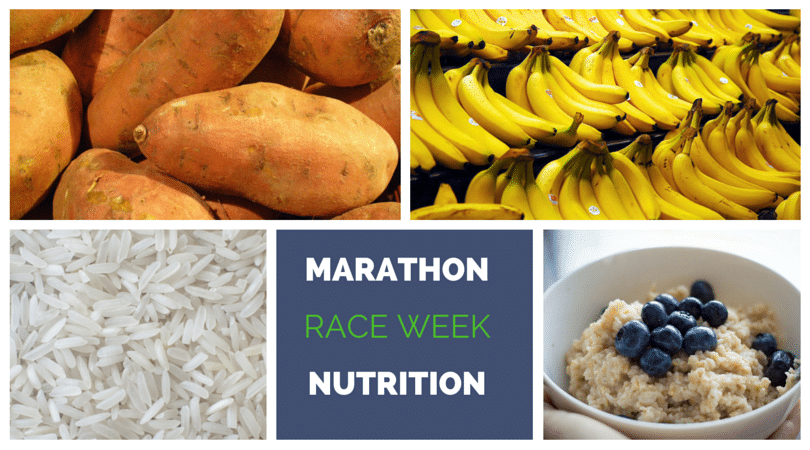
Real food bananas, raisins, dates, is legitimate fuel. Research found potato ingestion produced equivalent time-trial performance to commercial gels [5], but you’d need 128.5 grams of potato to match 23 grams of gel. That volume increases GI discomfort, and the road marathon logistics are obvious.
The bottom line?
Use gels as your primary fuel source, mix in chews for variety in the early miles, and treat real food as a welcome surprise at aid stations, not your primary strategy.
GI Distress: Why It Happens and How to Prevent It
Between 20–57% of marathon runners report at least one GI symptom during a race, nausea, cramping, bloating, or worse.
That statistic isn’t inevitable.
During intense exercise, blood is redirected away from the digestive system to your working muscles, which means your gut is functioning at reduced capacity precisely when you’re asking it to process gels every 20 minutes.
Add concentrated sugar without adequate water, or take a gel and a sports drink simultaneously at the same aid station, and you’ve created an osmotic mess your gut can’t handle.
The most common preventable mistake is taking gels without water.
Gels need fluid to dilute osmolality in the gut, never wash them down with sports drink, because you’re stacking two concentrated carbohydrate sources at once.
The second most common mistake: trying something new on race day.
If you haven’t practiced with it in training, don’t touch it on the course.
And start fueling early, by mile 4 or 5, before you feel any energy drop.
By the time you feel depleted, it’s already too late to fully reverse it.
Training Your Gut Is Not Optional
Here’s the good news: your gut is trainable.
Dr. Jeukendrup’s gut training research shows that consistently consuming carbohydrates during exercise stimulates your intestine to upregulate the transporters , SGLT1 and GLUT5 , responsible for absorption [6].
One study found that gut training can reduce GI symptoms by 26–47% and improve carbohydrate absorption by 45–54% [7].
The protocol is simpler than it sounds.
On every long run of 90 minutes or more, practice fueling with your target race product at your target race dose.
If you’re currently comfortable at 30 grams per hour, bump it to 40 on your next long run.
Build toward 60 grams per hour minimum over 8–12 weeks before your race.
You’ll tolerate some discomfort in training , mild bloating, a bit of fullness , while your gut adapts.
That mild training discomfort is far better than a mid-race GI disaster.
Don’t Forget Electrolytes
Carbohydrates get most of the attention, but sodium is the electrolyte you lose at the highest rate through sweat, and most runners aren’t replacing nearly enough.
A 2025 study found the average marathon runner consumed only 192 mg of sodium per hour, while the American College of Sports Medicine recommends 300–600 mg per hour for events over two hours [8].
The risk isn’t just cramping.
A landmark NEJM study of the 2002 Boston Marathon found hyponatremia, dangerous low blood sodium, in 13% of finishers, caused not by sodium loss but by drinking excessive plain water without replacing electrolytes [9].
The fix is simple: choose gels with sodium, carry electrolyte capsules, or use sports drink at aid stations for supplemental support, especially in the back half of the race.
If you regularly see white residue on your skin or clothing after long runs, you’re likely a salty sweater and should target the higher end of those recommendations.
Building Your Personalized Plan
The science gives you the framework.
Your long runs give you the answer.
Start with a target of 45–60 grams of carbohydrates per hour, choose a dual-source gel as your primary product, and practice on every long run.
Test different products. Note how your stomach responds. Adjust the dose, adjust the timing, keep notes.
The runner who nails marathon fueling isn’t the one who found the perfect gel.
It’s the one who showed up to the start line with a plan they’d already practiced enough times to trust.